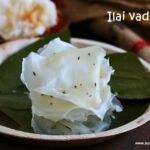
Elai vadam recipe
South Indian vadam recipe - Papad recipe
Servings: 18 vadams
Ingredients
- ½ cup Idli rice
- ½ cup Raw rice | pacharisi
- 1 tbsp Sago | javarisi 1 tblsp optional
- ¼ tsp Jeera | cumin seeds
- a pinch Omam | ajwain
- ¼ tsp Asafoetida
- Salt as needed
- Oil for deep frying vadams
Instructions
- Soak the idli rice , raw rice, and sago in water for 5 hours. Drain the water and grind it into a very smooth paste. Ensure that the batter is very smooth. You can grind this in a grinder, too. Since it is in small quantities, I used a mixie.
- Once it is ground nicely, add salt, asafoetida, cumin seeds, and omam to this.
- Mix it well and allow this to ferment for 2 hours. This is optional. You can start making it directly too. Some people ferment for 12 hours and make their own. Since aunty told me to do like this, i just followed the method.
- After 2 hours, mix the batter well and ensure the consistency is like dosa batter.
- Add water to an idli pan and keep a small cup filled with water inside.
- Keep a banana leaf on a plate that fits in the pan.
- Add a ladle of batter to this. Do not grease the leaf.
- Spread it in a circular motion like a dosa. Generally, this is called "ezhudardu" in Tamil, which means "writing" on the leaf.
- Steam this for 30-40 seconds; the batter will be steamed.
- Nowadays, we can find Ilai Vadam stands at leading stores in Tamil Nadu.
- When it is warm, slowly peel it off; it will come out easily.
- Spread a clean white dhoti, a newspaper, or a plastic sheet in a place that gets some sunlight in your house.
- Do it for the rest of the batter.
- Leave it overnight. I finished around 12 pm, and the next morning it was completely dry. Before going to sleep, it just flipped it once.
- If you are drying it under direct sunlight on an open terrace, it will dry in 2 hours.
- Store it in an airtight dry container.
- Whenever you want, you can deep-fry them in oil and enjoy them with any rice you choose.
- This can be kept even for a year if handled properly. Whenever you want to have it, fry it and eat.
- This can be had as a tea-time snack.
- You can sprinkle some red chili powder and have it too.
Notes
1. Ensure the batter is not too thin. If it is too thin, it will run out of the leaf.
2. Ensure that the batter is ground too soft without any grains. Slightly grainy too will end up in hard vadams.
3. Do not grease the leaf; if you do, you can not make it like a dosa.
4. Some people add green chilis while grinding, if you want you can do that.
5. Some people used to have the steamed ilai vadam as a tiffin too. Some spicy gravy will go with that.